Songwriting with Eno: 20 Lessons on Art and Focus
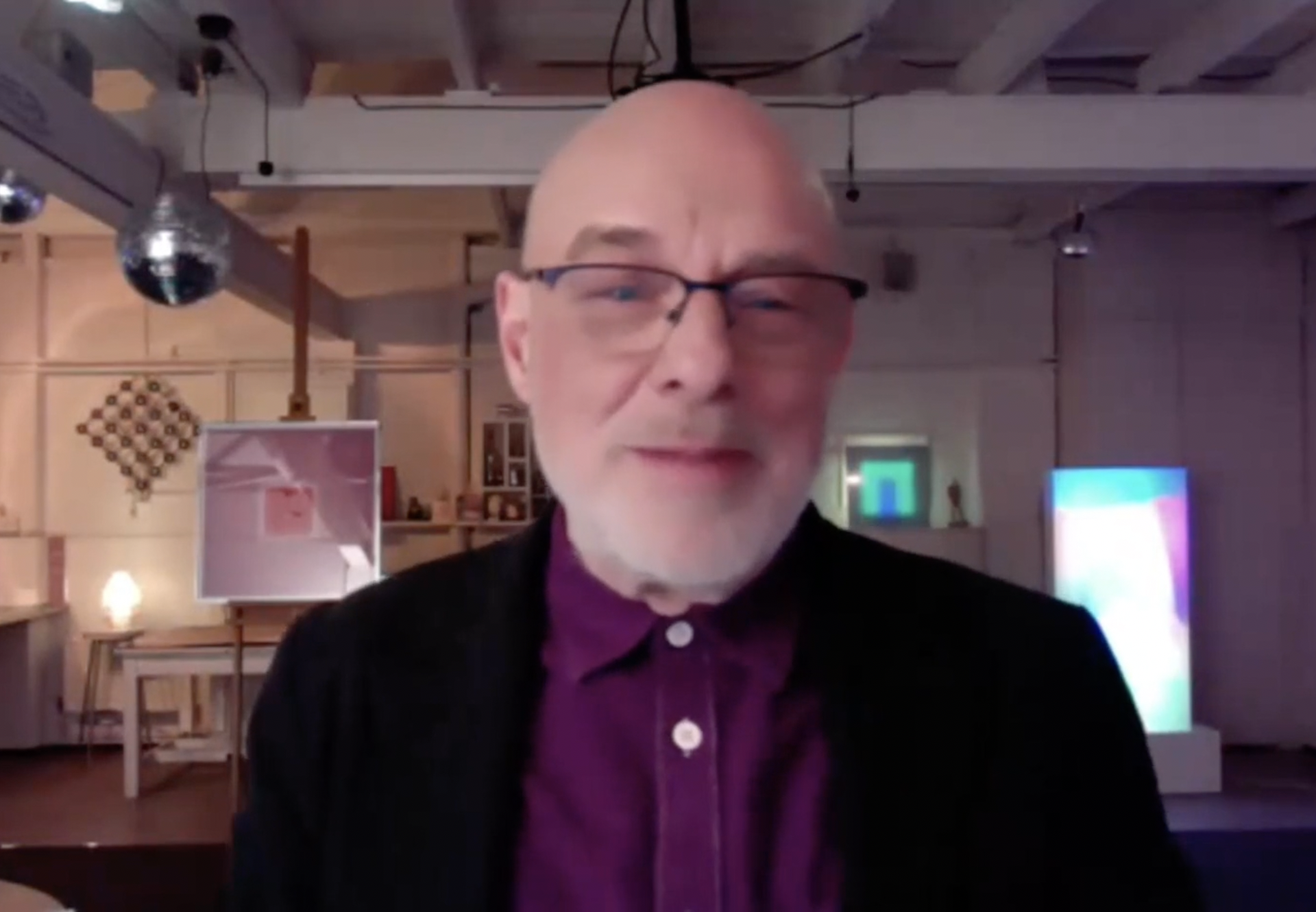
Last year, I took a School of Song class with Brian Eno, and "inspiring" doesn't quite cover it. It was a privilege to witness his process; his lectures felt like a masterclass in duality—partly improvised on the fly, yet clearly backed by years of dutiful preparation. Reviewing my notes this morning, I realized how much of that wisdom is still unfolding for me. One specific prompt—to write a protest song—became the catalyst for my song "Zombie Lover" (the result of which you can hear on my Bandcamp). I wanted to pass along this "Eno Gold" in hopes it sparks something in your own process.
Eno is known as the "Interventionist"—the producer who steps into a room and completely changes the creative energy. These notes are his distilled philosophy, not just on songwriting, but on how to live an art-centric life.
Who is Brian Eno?
Brian Eno is a self-described "non-musician" who fundamentally changed the way we think about sound. A pioneer of ambient music, a master of the recording studio, and a legendary visual artist, Eno is the ultimate "interventionist"—the person you call when you want to break a creative habit and find something entirely new.
Key Projects & Milestones
The Ambient Pioneer: He famously coined the term "Ambient" and released the landmark album Music for Airports (1978), designed to be "as ignorable as it is interesting."
The Architect of Art Rock: A founding member of Roxy Music, where he treated the synthesizer as a tool for texture and "sonic treatment" rather than just melody.
The Berlin Trilogy: Collaborated with David Bowie on Low, “Heroes,” and Lodger, redefining modern pop music through a lens of experimental electronics.
The "Fifth Member": Produced career-defining albums for U2 (The Joshua Tree), Talking Heads (Remain in Light), and Coldplay (Viva la Vida).
Oblique Strategies: Co-created a deck of cards (with Peter Schmidt) filled with cryptic instructions to help artists overcome creative blocks.
The Startup Sound: He even composed "The Microsoft Sound"—the iconic six-second startup theme for Windows 95.
Here is some Eno Wisdom, kept exactly as I wrote it down:
PART I: HOW WE LIVE
Schedule your days. A schedule will help focus you on what you need to accomplish.
Chase the thing you really love. Don’t pick up your effing phone while you are chasing something. NOT EVEN FOR A MINUTE!
Take breaks often. Brian likes to go out for a walk or a swim.
Be in the world. Don’t hide out. There’s a lot of inspiration out there, and it will stimulate you to make great art.
Make sure you have income so you can eat and sleep without distress. Eno advises young artists to get a shitty job, so they aren’t too comfortable and are motivated to spend more time with their art. Some artists are lucky enough to make their living from their art.
Sheppard your attention. The biggest industries and smartest people in the world are chasing YOUR mind, money, and attention. Choose where you focus your mind. Don’t be a slave to your phone. When you are on your phone, you are working for Bezos, Zuckerberg, and Musk to build a fascist America. Don’t buy in, but also don’t reject ways to reach your fans if it’s all you’ve got.
Make sure you are taking in art as well as making art. It might seem obvious, but it’s a vital reminder. I find that a day at the museum, or a conversation about books with my wife, Amber, always helps me make better music.
PART II: HOW WE BUILD A SCENE
Find your fellow travelers so you are in a climate of people who think and do as you do. Also, find other artists who think very differently. Build a scene and participate in the community. It will be rich soil to grow from.
How to choose collaborators? He asks himself what I can offer that they don’t have? Since Brian is not a musician, what can he add or how can he balance the project? “As a producer, I’m an interventionist.” I always have my instruments ready to go so I can insert my ideas into the work. He also loves to surprise artists with interesting song starters or sparks that make them slightly uncomfortable so that they react. The reaction can often lead to interesting art (surprising all parties).
PART III: HOW WE CREATE
The power of the archive. Eno is obsessed with the power of his own song archive, which his assistant designed. He recommends that archiving your horrible ideas often leads to wonderful moments of discovery. Shit. compost, you name it! The YOU that comes back to listen to your ideas is an entirely different person to the person who wrote the idea. Maybe you do something a little too good for you to understand? Maybe you do something so simple you don’t think it’s remarkable? Maybe you were chasing a ballad that day, and you actually wrote a sing-along? A well-cared-for archive that is full of all sorts of your “junk” ideas will sprout new flowers. He also doesn’t limit it to only his own creations, but sometimes adds other collaborators or even a song he was inspired by.
Get rid of SHOULDs in your Art. Art and should don’t mix! You can make a song 32 seconds long or 32 minutes long. I wrote a post about shoulds a few years ago.
“You don’t have to have a reason to make art. You especially don’t need a serious reason to make art.”
Create a world. Artists can create a world. He later reframed this as “we create a path or object that connects our world and the world of the person experiencing the art.” We offer up and share what we learn about our area (world).
If I do a double-take, I do a triple-take. When looking for inspiration, Eno said that if something grabs you, go deeper and see what inspired you (even if you are embarrassed to admit it).
Stay curious about structures: Structures and rules can help you have a jumping-off point to get started. Once the magic is happening, throw out the rules and go like hell. I love the last part of this. Rules are meant to get something going, and then you can go back to following your artistic instincts.
If you don’t have anything to say, say something stupid.
PART IV: HOW WE FINE-TUNE THE WORK
Art is about feelings. This is rarely discussed, he says, which is true in my experience. We often talk about how art is made or what inspired the artist, but not as much about the feelings of the artist or the audience.
Overdoing it: Most songwriters write about twice as much music as the listener really wants to hear. This is because the songwriter is writing and in “action mode” while the listener is receiving and processing the song that they are hearing. Songwriters can become deaf to their own music as they create on top of their work that they already know. Listeners don’t know the work/music yet, so they need more time and space to absorb it in most cases.
For Eno, “Most good art comes out of excitement or novelty.” These are the moments when your eyes are wide open. You are most alert and most excited to contribute.
The human voice takes up a huge amount of space and commands attention, so be careful not to cover up the beautiful music.
Which of these hits home for you today?